What Is Physical AI?
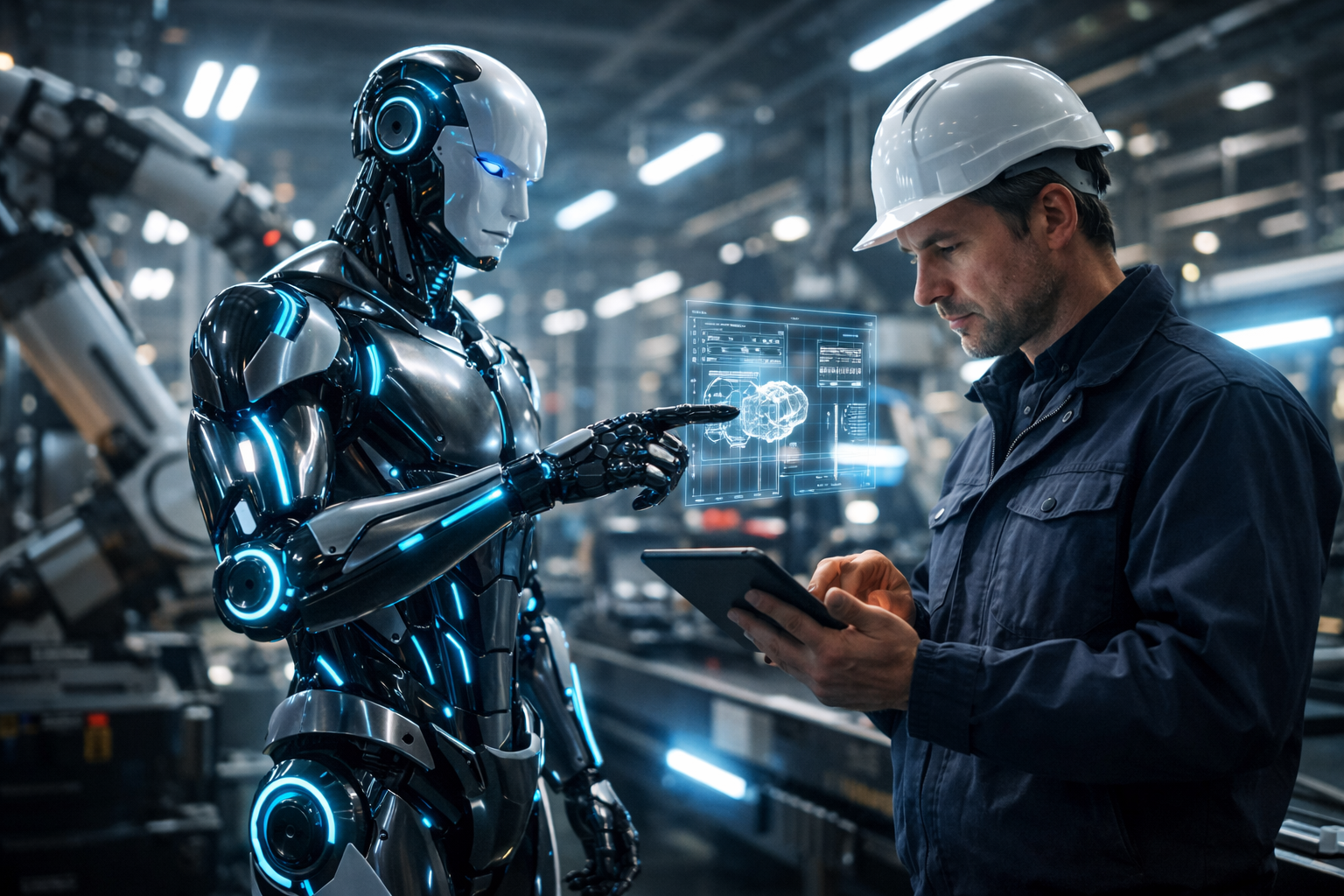
For decades, artificial intelligence existed primarily in the digital realm—processing text, generating images, and optimizing data. But 2026 marks a fundamental shift: Physical AI refers to models that understand and interact with the real world using motor skills, often housed in autonomous machines like robots and self-driving vehicles.
Unlike traditional AI that generates content, physical AI combines sensors, computer vision, and actuators, enabling machines to perceive, reason, and take meaningful actions. This is where AI stops being a passive tool and becomes an active agent in the real world.
Examples include:
-
Autonomous mobile robots
-
Drones
-
Humanoids
-
Quadrupeds
-
Mobile manipulator arms
The “ChatGPT Moment” for Robotics Has Arrived
At CES 2026, Nvidia CEO Jensen Huang declared:
“The ChatGPT moment for physical AI is here—when machines begin to understand, reason and act in the real world.”
Just like ChatGPT revolutionized text-based AI, this moment marks the democratization of reasoning AI for real-world applications. Nvidia unveiled:
-
Robot foundation models
-
Simulation tools
-
Edge hardware
These tools aim to make generalist robotics accessible across industries, just as Android did for smartphones.
Breakthrough Technologies Unveiled at CES 2026
1. Alpamayo: Reasoning AI for Autonomous Vehicles
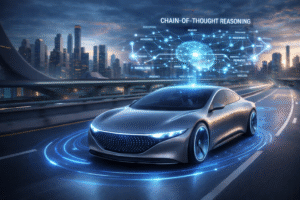
Alpamayo is the world’s first reasoning AI for autonomous vehicles, trained end-to-end from camera input to actuation output. Unlike traditional AVs that rely on pattern recognition, Alpamayo can think through edge cases, like navigating a traffic light outage or unexpected obstacles.
Key Features:
-
10 billion-parameter vision-language-action (VLA) model
-
Human-like reasoning for complex scenarios
-
Open datasets with 1,700+ hours of driving data
-
Simulation framework AlpaSim for safe testing
2. Nvidia Cosmos Models: Understanding the World
-
Cosmos Predict 2.5: Customizable world models for synthetic data generation and simulation
-
Cosmos Reason 2: Vision-language reasoning model enabling machines to perceive, understand, and act
These models give robots 3D situational awareness, enabling physics-based reasoning for navigation, manipulation, and decision-making.
3. GR00T: The Humanoid Robot Brain
-
Isaac GR00T N1.6 powers humanoids with reasoning AI
-
Supports full-body control using Cosmos Reason
-
Already adopted by Franka Robotics, NEURA Robotics, and other humanoid developers
4. Isaac Lab-Arena: Safe Simulation
-
Open-source simulation platform for virtual testing
-
Robots can train, fail, and improve without real-world risk
5. OSMO: Orchestration Hub
-
Integrates data generation, training, and deployment across cloud and edge
-
Connects the entire physical AI workflow
6. Vera Rubin: Superchip for Physical AI
-
Powers local edge reasoning for real-time decisions
-
Reduces dependency on cloud connections
-
Supports robots and autonomous vehicles operating independently
Real-World Applications Transforming Industries
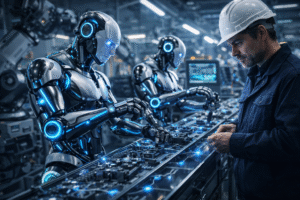
Manufacturing & Logistics
-
Robots gain the ability to perceive and respond to complex environments
-
Early adopters: Amazon, Foxconn, Caterpillar
-
Benefits: increased efficiency, faster delivery, creation of new skilled roles
Healthcare & MedTech
-
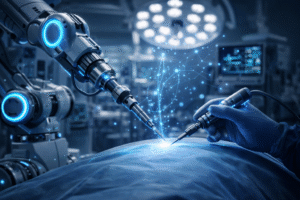
Surgical robots and diagnostic assistants
-
AI-driven imaging and automation reduce errors
-
Devices learn and adapt to different patient environments
Smart Homes & Domestic Automation
-
LG’s home robots adapt to household environments and user preferences
-
Humanoid robotics for multi-task domestic assistance
Humanoid Robotics: The Next Frontier
-
Boston Dynamics’ Atlas: Fully electric, learning-based movement
-
NEURA Robotics Gen 3: Optimized for industrial tasks
-
AGIBOT & Richtech humanoids: Industrial and consumer applications
Key Players Driving Physical AI Forward
-
Nvidia: Foundational platform for physical AI
-
Boston Dynamics, Caterpillar, Franka Robotics, Humanoid, LG Electronics, NEURA Robotics: Early adopters
-
Hardware partners: AAEON, Advantech, ADLINK, Aetina, Lanner, and more
Automotive Example: Mercedes-Benz CLA with Nvidia’s driver assistance powered by Alpamayo
Critical Technologies Enabling Physical AI
-
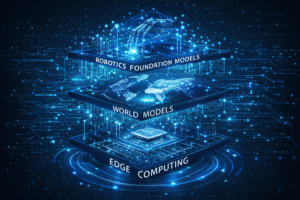
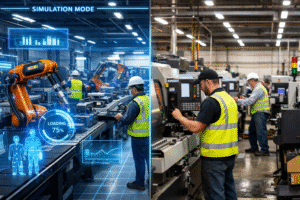
Simulation & Digital Twins: Test robots in photorealistic virtual environments before deployment
-
Vision-Language-Action Models: Unified models that see, understand, and act
-
World Models: Predict interactions in 3D spaces for reasoning-based decisions
-
Edge Computing: Robots execute AI locally for real-time response and privacy
Challenges Ahead
-
Complexity: Physical environments are dynamic and unpredictable
-
Cost & Accessibility: High-performance chips are expensive but adoption is accelerating
-
Integration & Workforce: Requires unified platforms, new roles, and organizational change
Why Physical AI Matters for Your Business
-
Timeline: Mainstream adoption begins in 2026–2027
-
Competitive Advantage: Efficiency, precision, and cost improvements
-
Workforce Evolution: Robots create new, higher-skilled roles rather than replacing humans
Key Takeaways
-
Physical AI is here: Machines move from demos to deployment
-
Reasoning matters: AI solves novel, real-world problems adaptively
-
Full-stack integration is essential: Models, simulation, hardware, and software must work together
-
Industry-wide impact: From manufacturing to healthcare to transport
-
Competition is fierce: Nvidia leads, but global rivals are accelerating innovation
Know more relevant topics:
The $3,000 Question: Apple Vision Pro vs Meta Quest 3: