
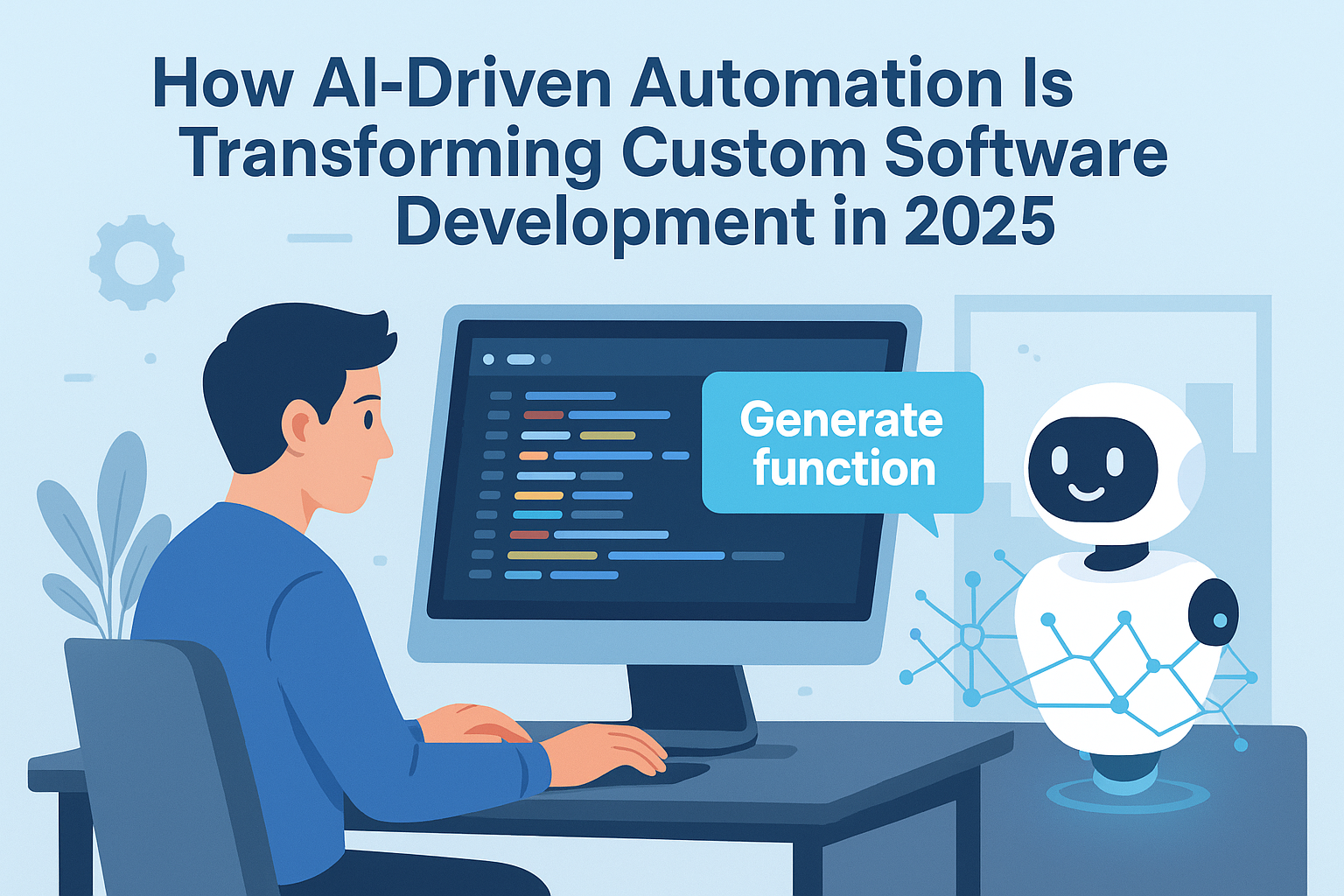
How AI-Driven Automation Is Transforming Custom Software Development in 2025
AI-driven automation is no longer a futuristic concept—it has become a core pillar of modern custom software development. In 2025, intelligent automation technologies are reshaping how software is planned, built, tested, and deployed. For IT companies like CodeSmiths, this shift enables faster delivery, reduced costs, and smarter, more scalable digital solutions.
Modern AI-powered tools can now generate code, detect bugs, optimize performance, and assist with architectural decisions. This allows development teams to focus on innovation, user experience, and complex business logic instead of repetitive manual work.
The Evolution of Automation in Software Development
The journey toward AI-driven automation began with simple scripting tools and rule-based systems in the early 2000s. These later evolved into CI/CD pipelines that automated testing and deployment but still depended heavily on human oversight.
The real turning point came after 2020, with advances in machine learning and generative AI. By 2023–2024, AI systems could:
- Predict potential code errors
- Suggest refactoring improvements
- Automate documentation
- Learn from existing codebases
By 2025, automation powered by AI has moved beyond assistance and become a strategic development partner.
Automation Across the Custom Software Development Lifecycle
AI-Assisted Software Development
AI-assisted development tools generate boilerplate code, APIs, and UI components using natural language prompts. This approach accelerates development while maintaining quality and consistency.
Automated Testing and Quality Assurance
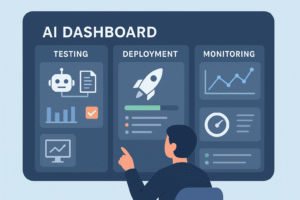
Intelligent testing systems identify edge cases, perform regression testing, and detect vulnerabilities early—reducing post-deployment issues.
Smart DevOps and Deployment
AI-powered DevOps platforms monitor performance, predict failures, and automatically scale infrastructure to ensure reliability and uptime.
Business Impact of Intelligent Automation
For companies like CodeSmiths, adopting AI-driven automation results in:
- Faster project delivery
- Lower development and operational costs
- Higher software quality
- Improved client satisfaction
- Secure and scalable applications
In today’s competitive landscape, intelligent automation is no longer optional—it’s a strategic advantage.
The Future of AI-Powered Software Development
Looking ahead, automation in software development will become even more advanced:
Self-Improving Software
Applications will analyze user behavior and automatically optimize performance and features.
AI Development Agents
AI agents will manage coding, testing, security checks, and deployment workflows independently.
Low-Code and AI Fusion
Businesses will describe requirements in plain language, and AI systems will generate production-ready applications.
Predictive Security
AI-based security models will anticipate threats before attacks occur.
Human expertise remains essential. The future belongs to human–AI collaboration, where strategic thinking and creativity guide automation.
Conclusion
AI-driven automation is redefining custom software development in 2025. Companies that embrace AI-powered workflows gain speed, efficiency, and innovation. For Codesmits, this means delivering smarter, scalable, and future-ready digital solutions.
The goal isn’t to replace developers—but to empower them. When human expertise works alongside intelligent automation, the future of software development becomes faster, safer, and more resilient.
Know more about relevant topics –>
AI Assistant CRM: https://codesmiths.in/ai-assistant-for-crm/
The Most Significant AI Discovery: https://codesmiths.in/alphafold-levinthals-paradox/
AI Powered Disease Surveillance System For Vector-Borne Illness: https://codesmiths.in/ai-powered-disease-surveillance-system-for-vector-borne-illnesses/
AI Powered Social Media Task Automation and Management System: https://codesmiths.in/ai-powered-social-media-task-automation-management-system/
Top 3 AI Myths Debunked: https://codesmiths.in/ai-myths-debunked/